



AV & Stage Integration
Everything overhead is a safety decision.
YKCA designs, installs, and powers load-rated rigging systems for Bay Area venues — truss grids, motorized hoists, and structural attachment engineered for the loads they carry, by a licensed C-10 contractor.
Why Rigging Is Different
If it hangs over people, it needs to be engineered.
A lighting fixture on a floor stand is a nuisance when it falls. The same fixture suspended twenty feet above an audience is a life-safety issue. That distinction defines how YKCA approaches every rigging project: load assessment before hardware, structural review before attachment, and documentation before anything goes in the air.
As a licensed C-10 contractor, YKCA handles the full overhead system — the mechanical structure, the motorized hoists, and the branch-circuit power that feeds them — under one accountable team. No handoff between an AV firm and a separate electrician for the motor circuits.
What We Deliver
Six capabilities, one rigging team.
Truss Systems & Grids
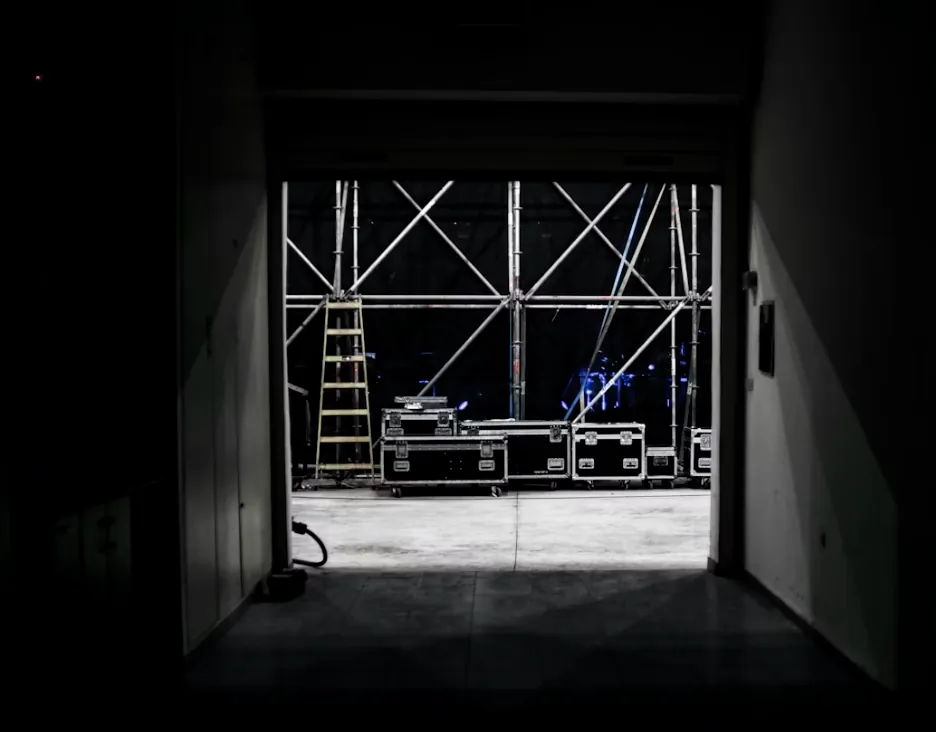
Modular and custom truss grids, box trusses, and pipe-and-base systems sized for your venue and load requirements.
Motorized Hoists & Chain Motors
Variable-speed chain hoists with load-rated rigging hardware, controlled from a single console or integrated into your show-control system.
Fixed & Portable Structures
Permanent overhead steel grids and portable ground-support systems for venues that need flexibility between configurations.
Rigging Points & Structural Attachment
Engineered attachment to existing steel, concrete, or wood structure — assessed, load-rated, and documented before any hardware goes up.
Load Assessment & Engineering
Full load calculation for every project. Licensed structural engineering review and stamp where required by the authority having jurisdiction.
Inspection & Maintenance
Annual and as-needed inspection programs, hardware replacement, and load-testing to keep your system performing to spec season after season.
Engineering Mindset
The structure above the stage is not a place for improvisation.
Every rigging point YKCA installs is load-rated to manufacturer specification. Every motor is matched to the structure it attaches to. Every cable run and branch circuit powering overhead equipment is designed and installed under our C-10 license — so one team is accountable for the whole overhead system from the steel to the service panel.
Third-party inspected where the project scope requires it.
FAQ
Rigging questions, straight answers.
Plan Your Rig
Tell us what needs to go overhead. We'll tell you how to hang it safely.
From a single truss span to a full overhead grid — we scope the structure, the motors, and the power as one project, then build it.