



Tesla Wall Connector
Tesla Wall Connector Installation — Done Right
Hardwired termination, dedicated 60A circuit, up to 48A charge rate, power-sharing for multiple connectors, WiFi — and the Universal Wall Connector now charges non-Tesla EVs too. Licensed C-10 electricians, CSLB C-10.
Why Hardwired Matters
Not just plugged in — properly terminated.
Most EV charger installs are straightforward. Tesla Wall Connector installs have one common shortcut we refuse to take: using the NEMA 14-50 plug adapter instead of hardwiring the unit. Hardwired termination is faster (up to 48A vs 32A max through a 14-50), cleaner, and eliminates a plug-and-receptacle connection that can arc or loosen over years of daily use.
Every Tesla Wall Connector we install gets a dedicated 60A breaker, hardwired at the unit, with the circuit sized to NEC 220.87 load calculation against your actual panel. If your panel is tight we tell you before we start — and we'll give you the panel upgrade quote on the same visit if needed.
WiFi setup, app commissioning, and the $200 service call — applied to your total if you proceed.
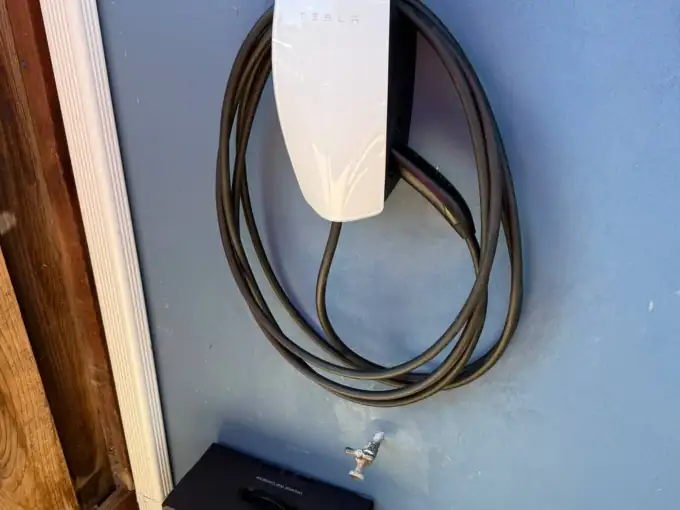
Real YKCA Tesla Wall Connector install.
Key Specs
Tesla Wall Connector at a glance.
The numbers that matter for permit, panel sizing, and daily charge speed — so you can have an informed conversation with your electrician before the quote visit.
Max charge rate
48A / ~44 mi/hr
Recommended breaker
60A dedicated
Termination
Hardwired (preferred)
Connectivity
WiFi + app control
Non-Tesla EVs
Universal connector (J1772)
Power sharing
Up to 4 units, 1 circuit
Two Things to Know Before You Buy
Hardwired vs plug-in. And who can charge from it.
Hardwired vs NEMA 14-50 Plug
The Tesla Wall Connector can be either hardwired directly to the circuit or connected via a NEMA 14-50 plug adapter. The plug adapter is marketed as "flexible," but there are real tradeoffs:
- Hardwired: up to 48A output, no connector wear, cleaner code compliance, preferred for permanent installs
- NEMA 14-50 plug: capped at 32A, introduces a wear point, marginally cheaper up front
- Our recommendation: hardwired, every time, unless you have a clear reason to unplug
Universal Connector — Charges Every EV Now
The current Tesla Wall Connector ships as the Universal Wall Connector with a built-in NACS-to-J1772 adapter. That means it charges non-Tesla EVs — Ford Mustang Mach-E, Rivian R1T/R1S, GM EVs, Hyundai/Kia, Nissan Leaf, Volkswagen, and others — without any third-party adapter.
If you have a mixed household — one Tesla, one non-Tesla — one Universal Wall Connector handles both vehicles. One circuit, one charger, one install. We set it up for your vehicles at commissioning.
FAQ
Tesla Wall Connector questions, straight answers.
Ready to Install?
Schedule a load-calc + quote visit.
$200 on-site assessment — applied to your project total if you proceed. Fixed written quote within 48 hours. Licensed C-10 electricians, CSLB C-10.