


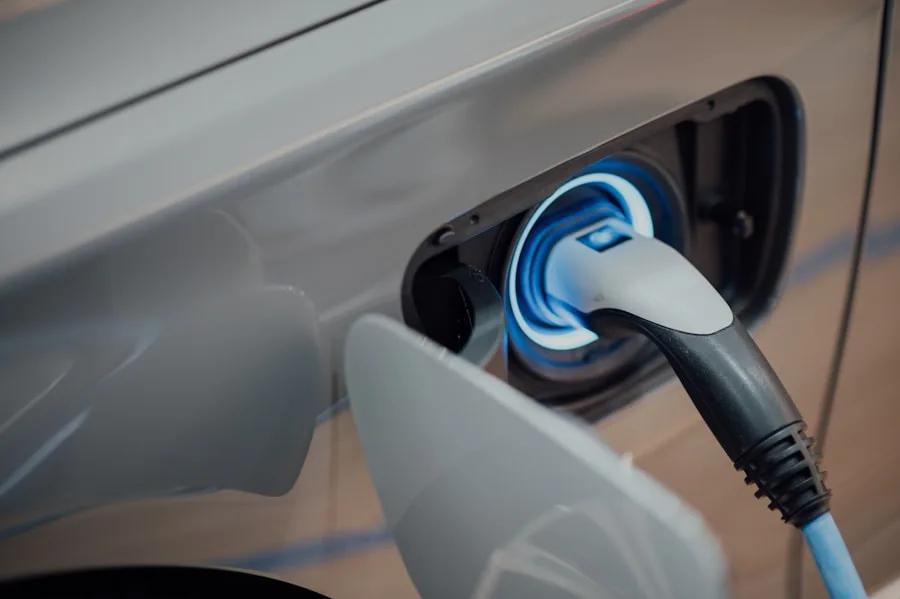


EV Charging
EV Fleet Charging for Bay Area Businesses: A Planning Guide
Published April 12, 2026 · 8 min read
The shift to electric vehicles is no longer a future possibility — it is an operational reality for Bay Area businesses. California's Advanced Clean Fleets regulation requires medium- and heavy-duty fleets to begin transitioning to zero-emission vehicles as early as 2024, with full compliance timelines extending through 2042. Whether you operate a delivery service in San Jose, a municipal fleet in Oakland, or a logistics company in Fremont, planning your EV fleet charging infrastructure now is essential to staying compliant and competitive.
At YKCA Electric, we have designed and installed commercial fleet charging systems across the Bay Area. This guide walks you through the key considerations — from electrical capacity and charger selection to PG&E coordination and available incentives — so you can build a deployment plan that scales with your fleet.
Assessing Your Fleet Electrification Timeline
Before purchasing a single charger, you need to map your fleet transition schedule. Start by identifying which vehicles will be replaced first, their daily mileage requirements, and the dwell times available for charging. Vehicles that return to a central depot overnight — such as delivery vans, shuttle buses, and service trucks — are ideal candidates for Level 2 charging. Vehicles with shorter turnaround windows between shifts may require DC fast charging.
A phased approach is almost always more cost-effective than a full buildout. Phase one might electrify 20-30% of your fleet with Level 2 chargers on existing electrical infrastructure. Phase two scales up with panel upgrades and additional circuits. Phase three may introduce DC fast chargers and dedicated transformers for full fleet coverage. This staged rollout lets you spread capital expenditure over multiple budget cycles while learning from real-world usage data.
Level 2 vs. DC Fast Charging for Fleets
Level 2 chargers deliver 7.2 to 19.2 kW per port and are the workhorses of overnight fleet charging. A typical Level 2 station adds 25 to 60 miles of range per hour, making it well-suited for vehicles that sit idle for 8 or more hours overnight. The hardware costs $1,200 to $3,500 per unit, and installation runs $2,000 to $6,000 depending on circuit length and panel capacity. For a fleet of 20 delivery vans parked overnight, Level 2 charging is usually the most economical solution.
DC fast chargers (DCFC) operate at 50 to 350 kW and can replenish 80% of a vehicle's battery in 20 to 60 minutes. They are essential for fleets that run multiple shifts or have vehicles that cannot be parked for extended periods. However, DCFC hardware costs $30,000 to $150,000 per unit, and the electrical infrastructure requirements are substantial — often requiring a dedicated transformer and utility service upgrade. For most Bay Area fleets, a combination of Level 2 for overnight charging and one or two DC fast chargers for midday top-ups provides the best balance of cost and flexibility.
Electrical Infrastructure Requirements
Fleet charging places significant demands on your facility's electrical system. A single Level 2 charger on a 40-amp circuit draws about 9.6 kW. Ten chargers running simultaneously require 96 kW — roughly equivalent to adding a small commercial building to your electrical load. Twenty chargers push you close to 200 kW, which often exceeds the capacity of existing panels and may require a service upgrade from PG&E.
Key infrastructure components to evaluate include:
- Main electrical panel capacity: Most commercial buildings have 400A to 800A service. A full fleet charging deployment may require 1,200A to 2,000A.
- Transformer sizing: Your existing transformer may not support the additional load. PG&E may need to install a larger unit, which can take 6 to 18 months to procure and install.
- Conduit and wire runs: Longer distances between the panel and charging stations increase installation costs. Trenching through parking lots adds $50 to $150 per linear foot.
- Switchgear and subpanels: Dedicated EV subpanels simplify load management and allow independent metering for fleet charging costs.
Load Management and Smart Charging
Load management software is critical for fleet charging. Without it, plugging in 15 vehicles at 5 PM when your facility's HVAC and lighting are still running can trigger demand charges that dwarf your energy costs. Smart charging systems distribute available power across connected vehicles based on priority, departure time, and state of charge.
For example, a facility with 200 kW of available overnight capacity can serve 20 vehicles through intelligent load sharing — each vehicle receives the energy it needs by morning, but no more than 10 charge simultaneously at full power. This approach can reduce your required electrical infrastructure by 40-60% compared to an unmanaged deployment, saving tens of thousands of dollars in panel and transformer upgrades.
Leading fleet charging platforms like ChargePoint, Enel X, and Siemens eMobility offer built-in load management, fleet scheduling, driver authentication, and energy cost optimization. Many integrate directly with PG&E's commercial EV rate schedules to charge vehicles during the lowest-cost hours.
Coordinating with PG&E
PG&E involvement is typically required for any fleet charging deployment over 100 kW. Start the utility coordination process early — at least 12 months before your target go-live date. PG&E's process includes a load study to determine whether your local distribution circuit can support the additional demand, and transformer procurement if an upgrade is needed.
PG&E offers several commercial EV rate plans designed for fleet charging. The BEV-2 rate plan, available for separately metered EV charging loads, features lower demand charges and favorable off-peak energy rates. For larger deployments, PG&E's EV Fleet program provides infrastructure support including transformer installation, panel upgrades, and dedicated metering — often at reduced or no cost to the business through their rate-based investment programs.
Request a preliminary load assessment from PG&E as your first step. This free consultation identifies potential constraints on your circuit and gives you a realistic timeline for any required utility-side upgrades.
Cost Modeling: What to Budget
A realistic budget for a 20-vehicle Level 2 fleet charging deployment in the Bay Area typically breaks down as follows:
- Charging hardware (20 units): $40,000 - $70,000
- Electrical installation (panels, conduit, wiring): $60,000 - $120,000
- Transformer upgrade (if required): $25,000 - $75,000
- Trenching and civil work: $15,000 - $40,000
- Permitting and engineering: $8,000 - $15,000
- Network software (annual): $3,600 - $12,000
- Total estimated range: $150,000 - $330,000
These figures vary significantly based on your facility's existing electrical capacity, distance from the panel to parking areas, and whether utility-side upgrades are needed. A phased deployment spreading this investment over 2-3 years reduces annual capital requirements and allows you to capture incentives as they become available.
Grants and Incentives for Commercial Fleet Charging
California offers some of the most generous fleet electrification incentives in the country. Current programs available to Bay Area businesses include:
- CARB HVIP (Hybrid and Zero-Emission Truck and Bus Voucher Incentive Project): Per-vehicle vouchers for qualifying zero-emission trucks and buses, ranging from roughly $7,500 for the smallest Class 2b trucks up to several hundred thousand dollars for Class 8 and transit bus configurations. Drayage, refuse, and school bus categories have their own enhanced amounts, and small-business fleets can capture additional uplifts on a limited number of vouchers.
- CEC EnergIIZE: Multiple funding lanes for fleet charging infrastructure. The standard EV Fast Track lane covers 50% of eligible equipment and software costs up to $500,000 per project; the Jump Start equity lane can reach $750,000, and specialized lanes (public charging, megawatt-scale charging) carry their own caps. Funding rounds are competitive and limited.
- PG&E EV Fleet Program: Covers utility-side "to-the-meter" infrastructure (transformer, service line, meter) at no cost to qualifying participants. Charger rebates are structured by port power level — for example, eligible fleets can receive 50% of charger cost up to caps that scale with charger size, with the largest awards reserved for school buses, transit buses, and projects in disadvantaged communities (Fortune 1000 companies are not eligible).
- Bay Area Air Quality Management District (BAAQMD): Fleet electrification grants for businesses operating in communities disproportionately affected by air pollution.
- Federal 30C Tax Credit: Up to 30% of qualified EV charging equipment and installation costs, capped at $100,000 per item, for businesses that meet prevailing wage and apprenticeship requirements (a base 6% credit otherwise). The property must be in an eligible census tract and placed in service by June 30, 2026 under current law — confirm eligibility and deadlines before relying on this credit.
In optimal scenarios, stacking multiple incentives can offset 30–50% of total project costs. Actual incentive amounts depend on program availability, funding cycles, and project eligibility at time of application. Most grant programs (such as CEC EnergIIZE) are competitive with limited funding rounds — approval is not guaranteed. Working with an experienced installer who understands the application requirements can improve your approval odds.
Planning Your Deployment: A Step-by-Step Timeline
Based on our experience with Bay Area fleet projects, here is a realistic timeline for a medium-scale fleet charging deployment:
- Months 1-2: Fleet assessment, site survey, electrical load study, and preliminary design.
- Months 2-4: PG&E coordination, utility load study, incentive applications submitted.
- Months 4-6: Engineering design, permitting, equipment procurement.
- Months 6-8: Utility-side upgrades (if required), trenching, conduit installation.
- Months 8-10: Charger installation, electrical connections, network commissioning.
- Months 10-12: Testing, driver training, fleet management software configuration, go-live.
If your facility requires a new transformer from PG&E, add 6 to 12 months to this timeline. This is the single most common cause of project delays, and it is why we recommend starting the utility coordination process as early as possible.
Why Work with a Licensed C-10 Contractor
Fleet charging installations involve high-voltage electrical systems, coordination with utilities, and compliance with NEC 2023, California Title 24, and local building codes. A licensed C-10 electrical contractor ensures your installation meets all code requirements, passes inspection on the first attempt, and qualifies for available incentives. At YKCA Electric, we handle every aspect of commercial fleet charging — from initial site assessment and utility coordination through installation, commissioning, and ongoing support.
If your Bay Area business is planning a fleet transition, contact us for a complimentary site assessment. We will evaluate your electrical infrastructure, recommend a phased deployment plan, and identify the incentives available for your specific project.
← Back to News & TipsNeed Professional Help?